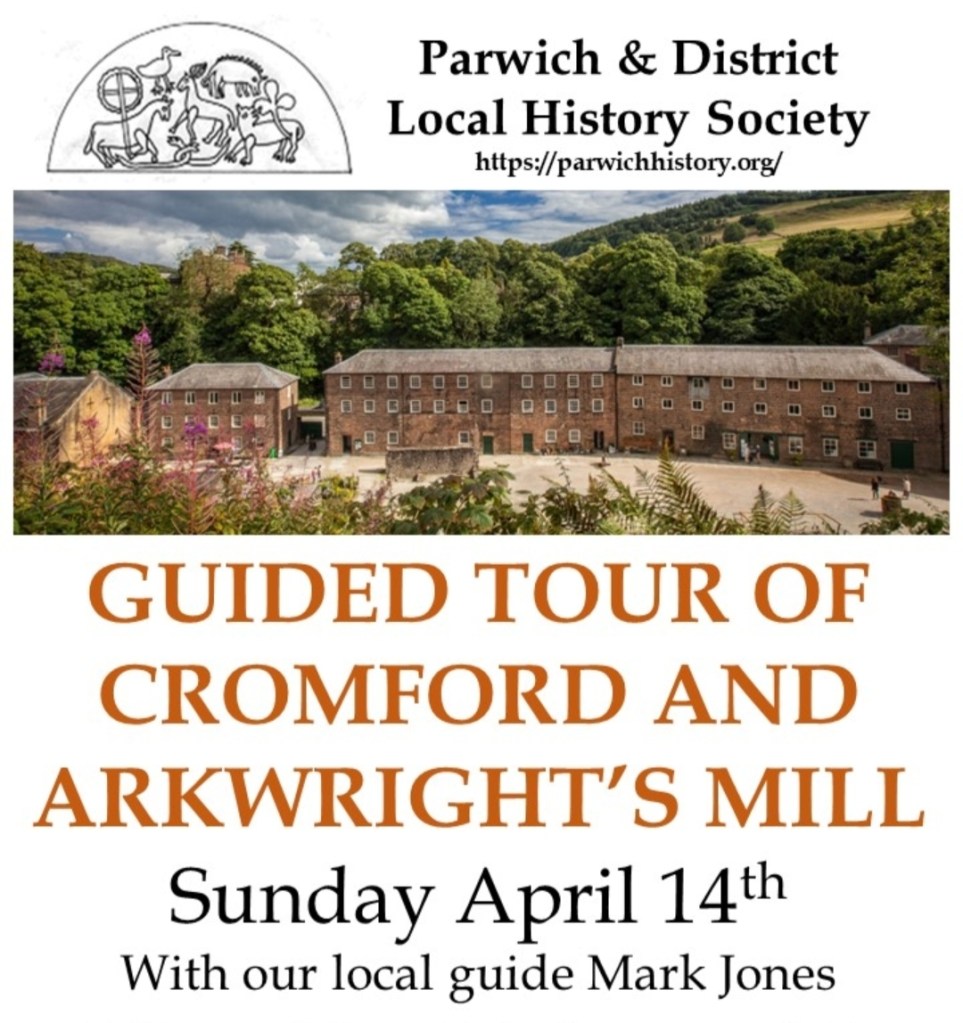
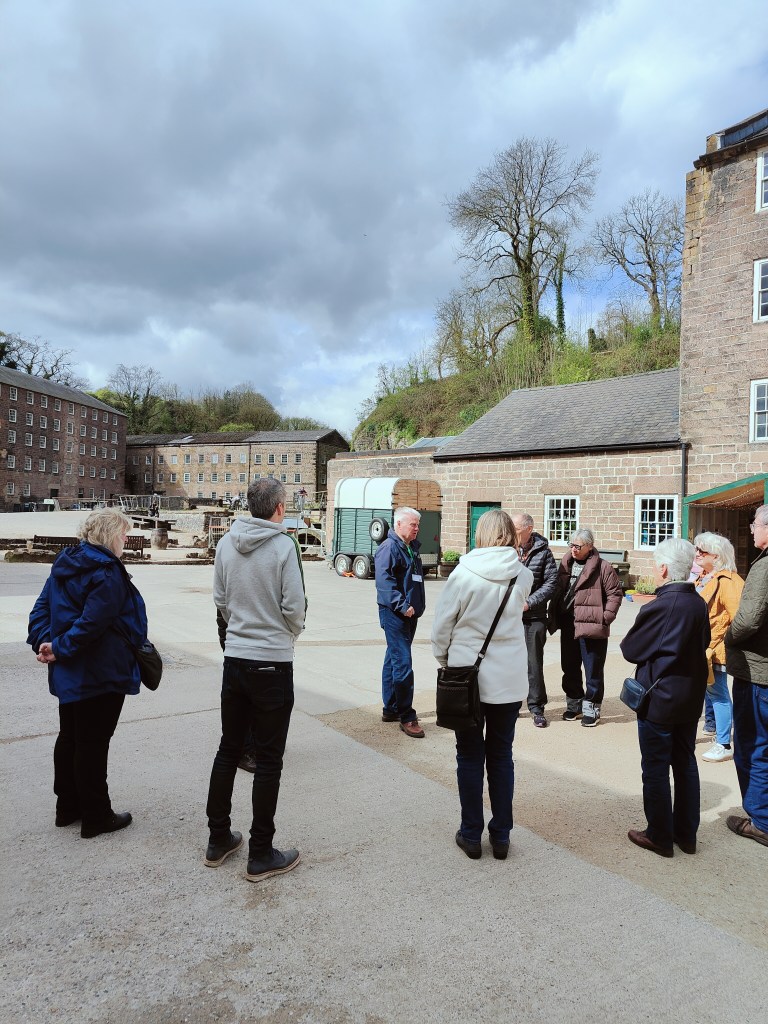
On Sunday 14th April the History Society, its members and friends from Parwich headed to the nearby Cromford Mill where we were treated to a guided tour of the mill and local places of interest associated with the mill and its founder Sir Richard Arkwright.
A huge thank you goes out to Parwich’s very own Mark Jones who as our Tour guide made the day enjoyable and informative, sharing stories and really making the history come to life.
Cromford Mill, the world’s first successful water powered cotton spinning mill, was built in 1771 by Sir Richard Arkwright. Driven by the need for power he searched for a site to build a water powered mill and settled upon Cromford, using the Bonsall Brook and the Cromford Sough.
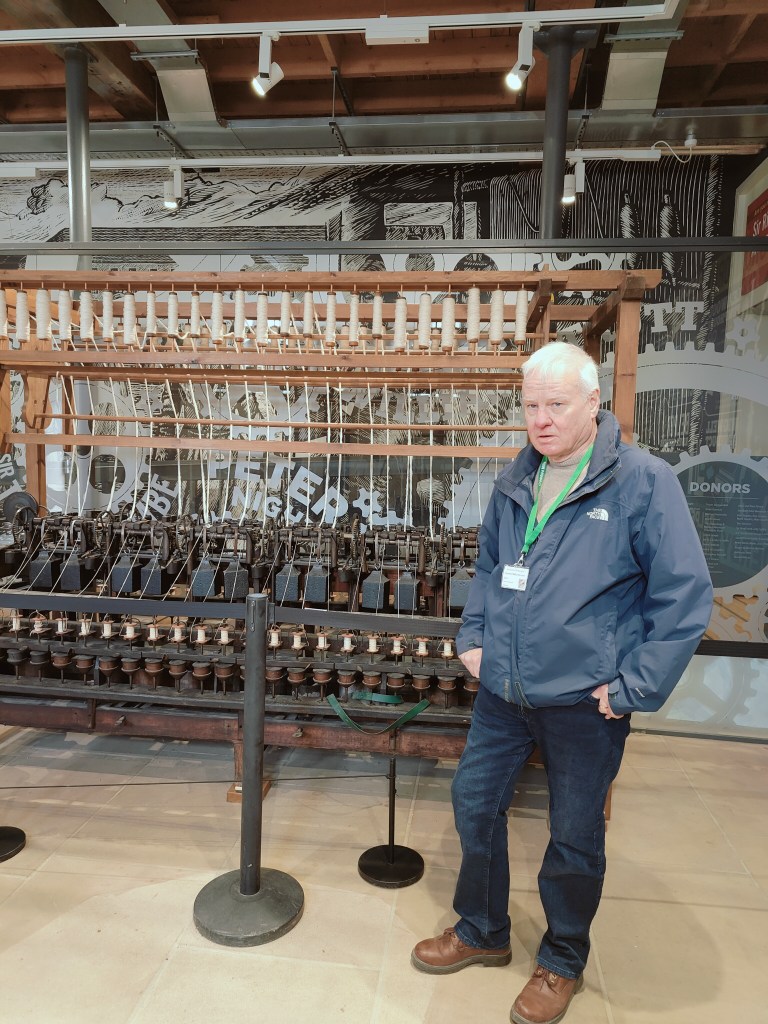
From then until around 1790, he continued to develop the mills, warehouses and workshops, which now form the Cromford Mills site. In the period between 1770s and the 1790s hundreds of Arkwright style mills were built around the country, using his machines and production methods. Arkwright had shares in many of them. His invention of the waterframe to spin cotton transformed the manufacture of cotton into England’s major industry and created a system of factory production that spread throughout the world. The cotton industry was a cornerstone of the industrial revolution.
The site grew rapidly, and Arkwright needed to attract more workers to the area; he expanded Cromford Village with the building of Derbyshire’s first row of planned industrial housing on North Street in 1776. Arkwright later built the marketplace, the Greyhound Hotel, and further housing for his growing workforce to create the village you see today.

Arkwright himself started from humble beginnings as an apprentice barber and wigmaker and went on to become one of the wealthiest men in the country. Keen to display his standing, he started to build Willersley Castle and St Mary’s Church, but sadly died before both were finished.
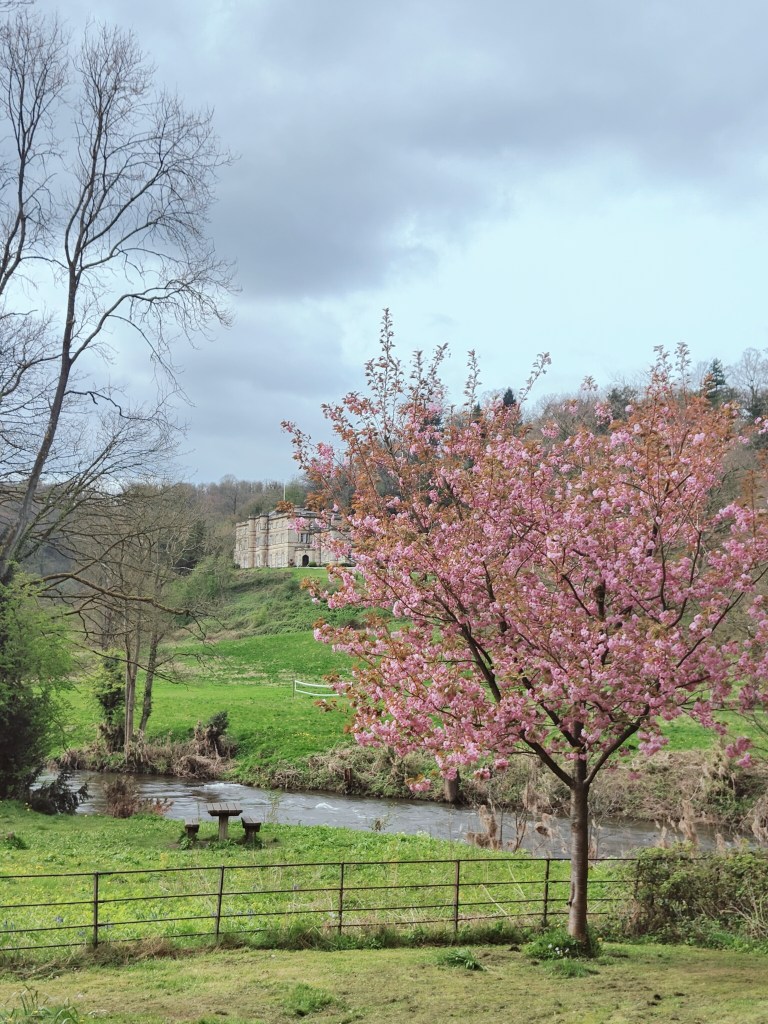
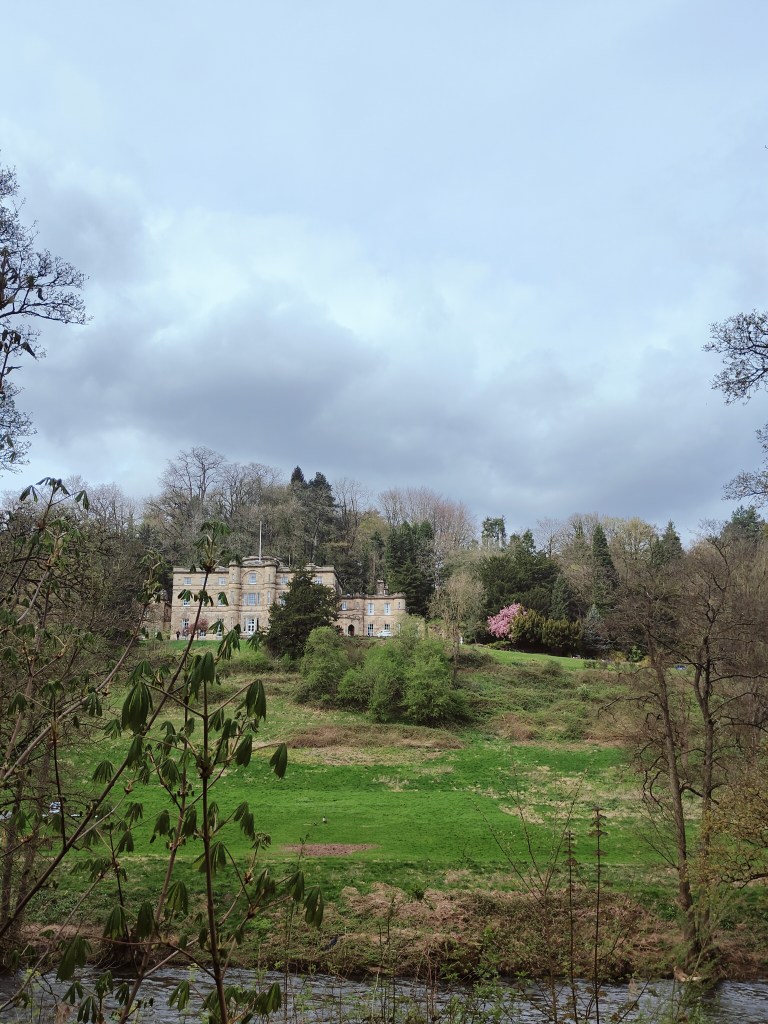
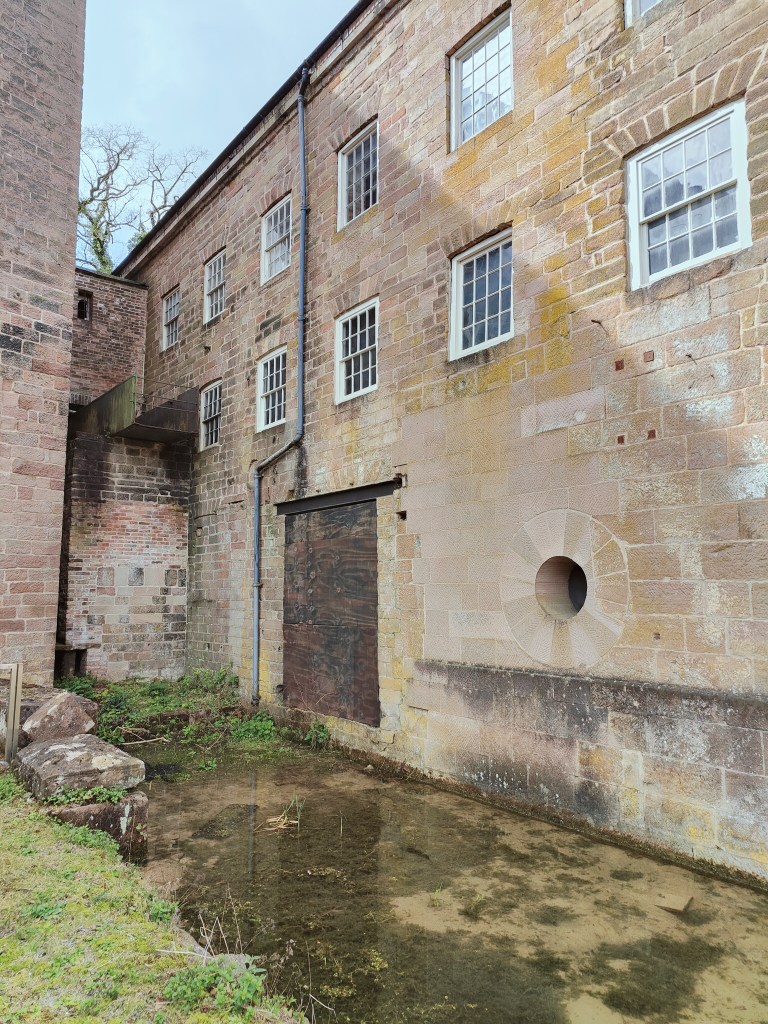
Our tour included the Mill site with information about the production of cotton, and the village of Cromford. Mark also showed us the newly finished Cromford Waterpower project which has reinstated a large 6m waterwheel and installed a 15kW hydro-turbine to power the mill buildings, and ended the fantastic tour with a rare and fascinating look inside the breathtaking St Mary’s Church.
 Parwich & District Local History Society
Leave a comment